High Desert Junipers
Western junipers occupy some of the most challenging terrain in Oregon’s high desert. In the Oregon Badlands Wilderness, their knurled and furrowed trunks record long exposure to wind, cold winters, and dry, unforgiving soil. Over decades and centuries, their spiral grain tightens and loosens, slowly shaping each tree into its twisted, iconic form.
These trees endure in places where survival is itself a measure of resilience. Their drought tolerance depends on a dual root system: shallow roots that respond quickly to surface moisture and a deep taproot that reaches far below. When water arrives, a mature juniper can absorb as much as forty gallons in a single day.
Climate change alters the conditions that have long defined these landscapes. Rising temperatures and prolonged drought increase heat stress, shorten lifespans, and elevate the risk of fire. Yet the same conditions can create new opportunities. As less drought-tolerant vegetation declines, junipers may expand into areas once beyond their reach, adjusting to landscapes in motion.
Ultimately, the junipers persist, shaped by a changing environment and still responding to it.
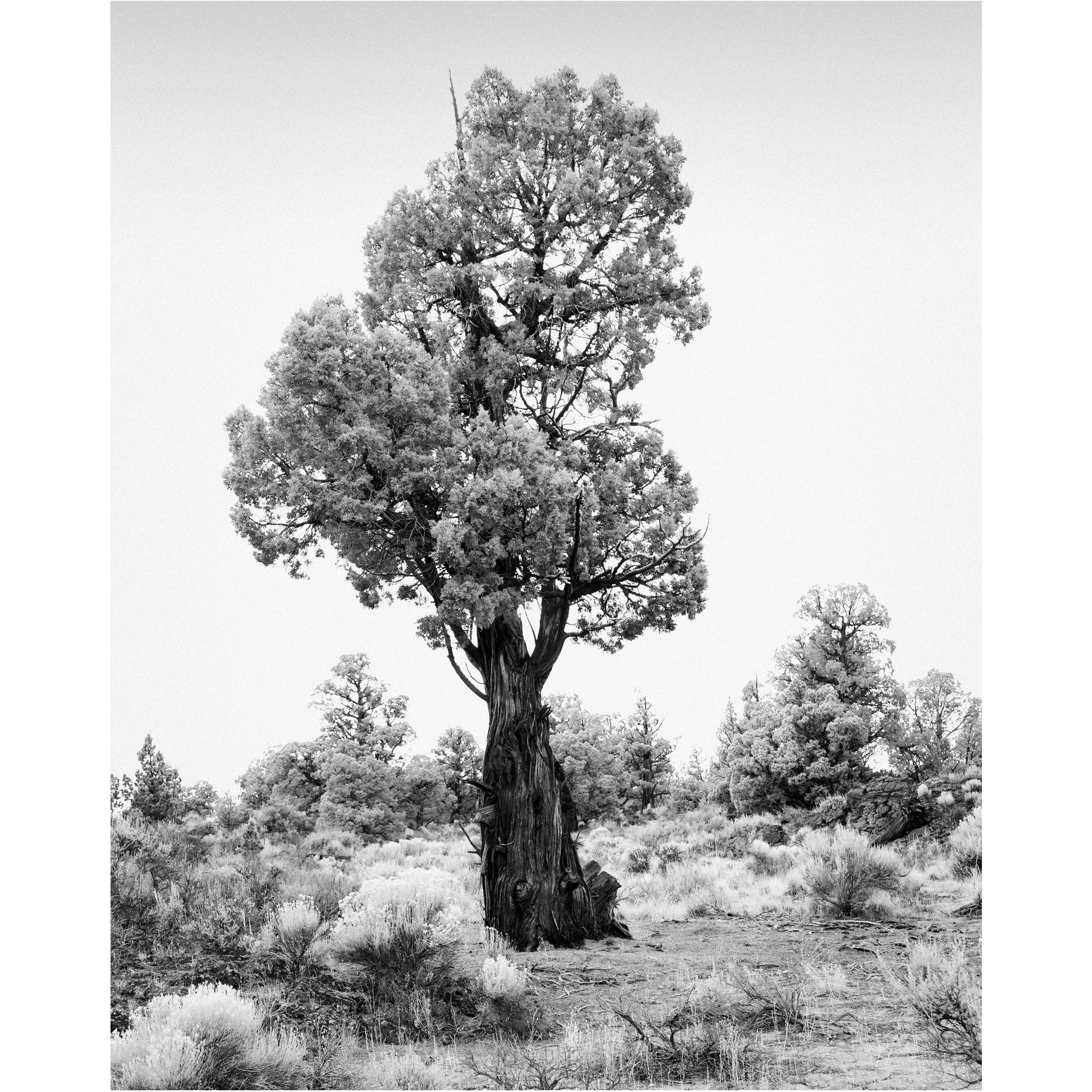
Shaped by many decades, drought, and wind, this lone juniper perseveres in the harsh desert.
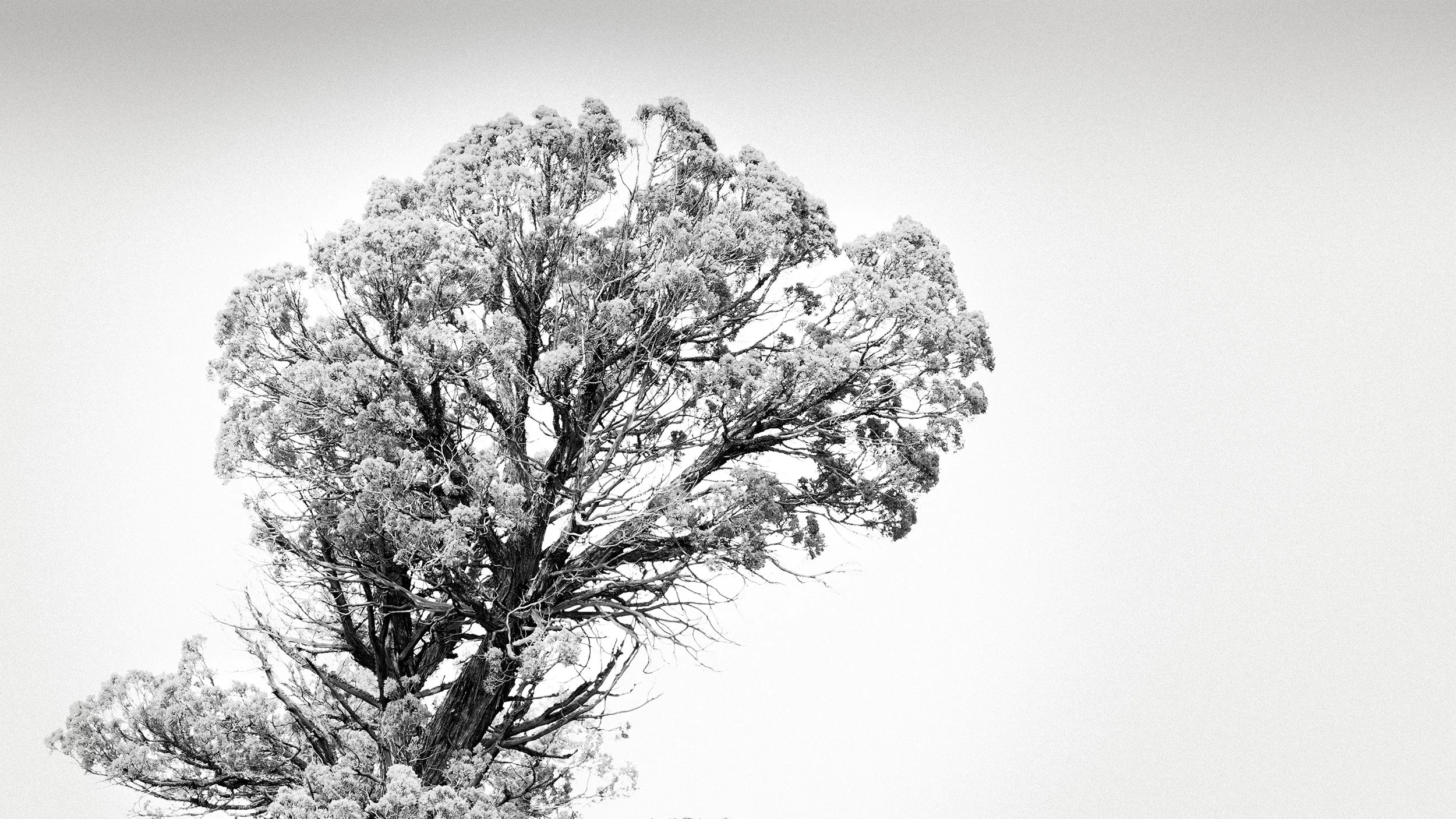
Small, scale-like blue-green leaves form textured, irregular canopies shaped by wind and arid conditions.
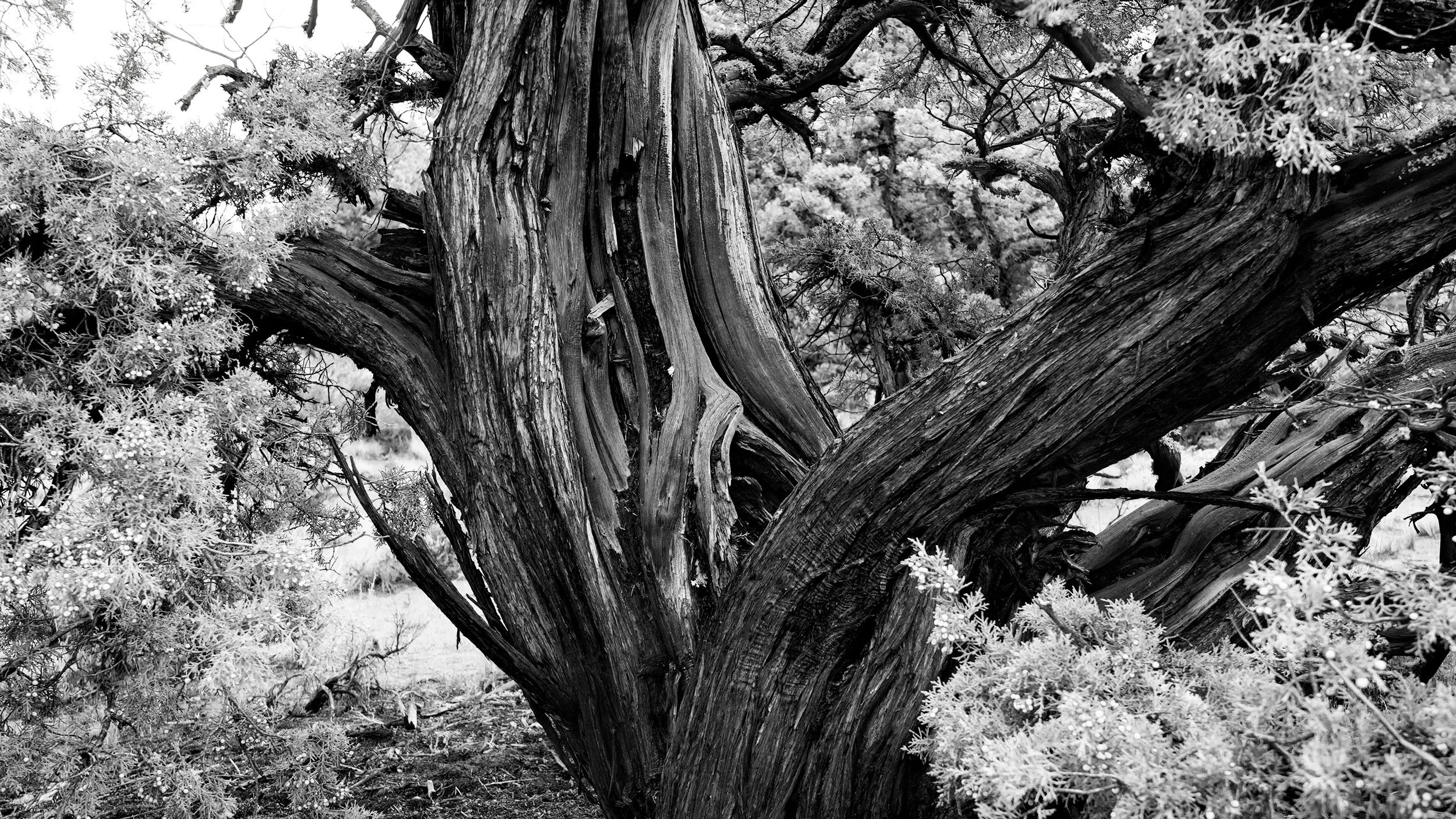
Split trunks reveal centuries of stress and growth, yet the juniper prevails in the high desert.
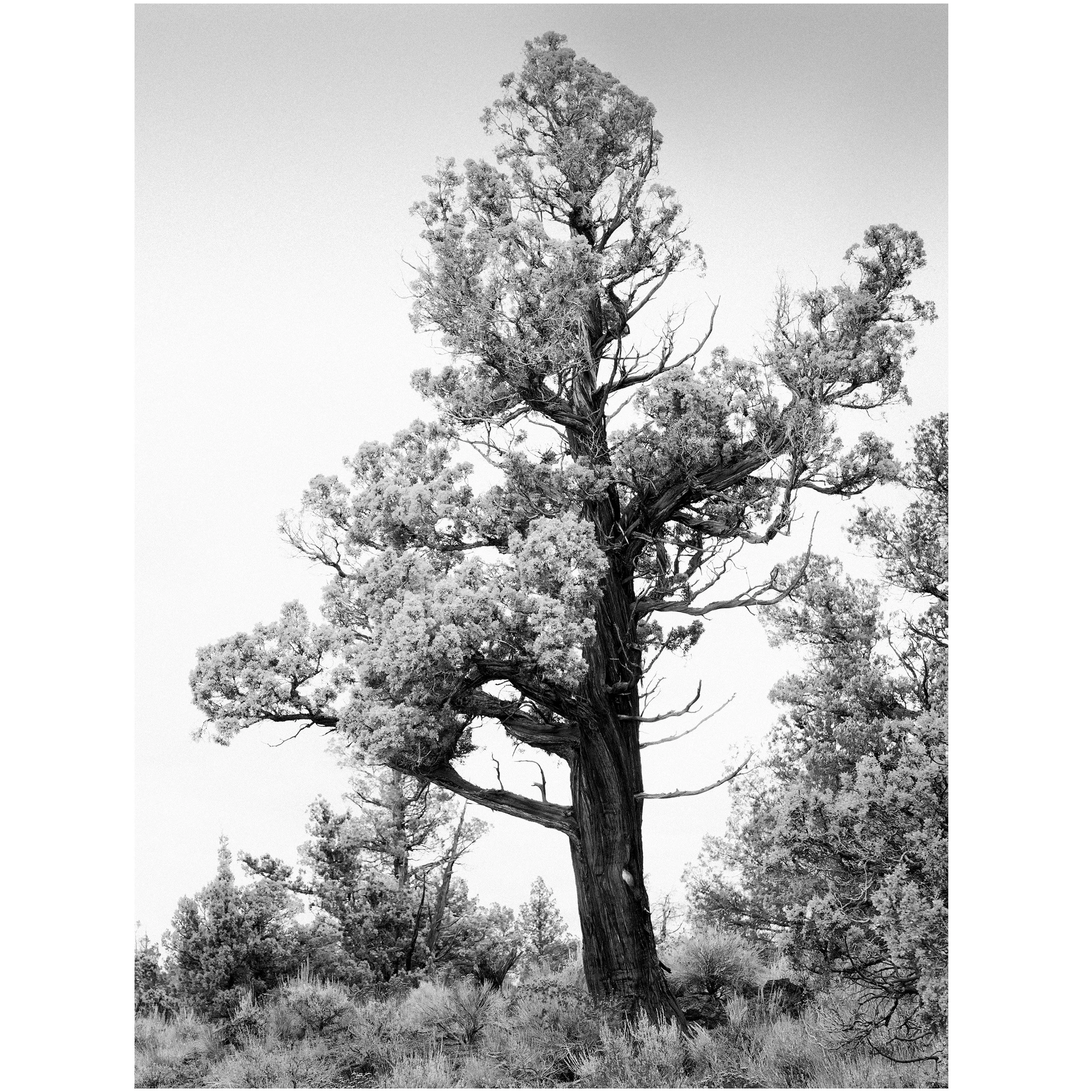
Western Junipers are long lived, with some estimated to live for 1,600 years or more.
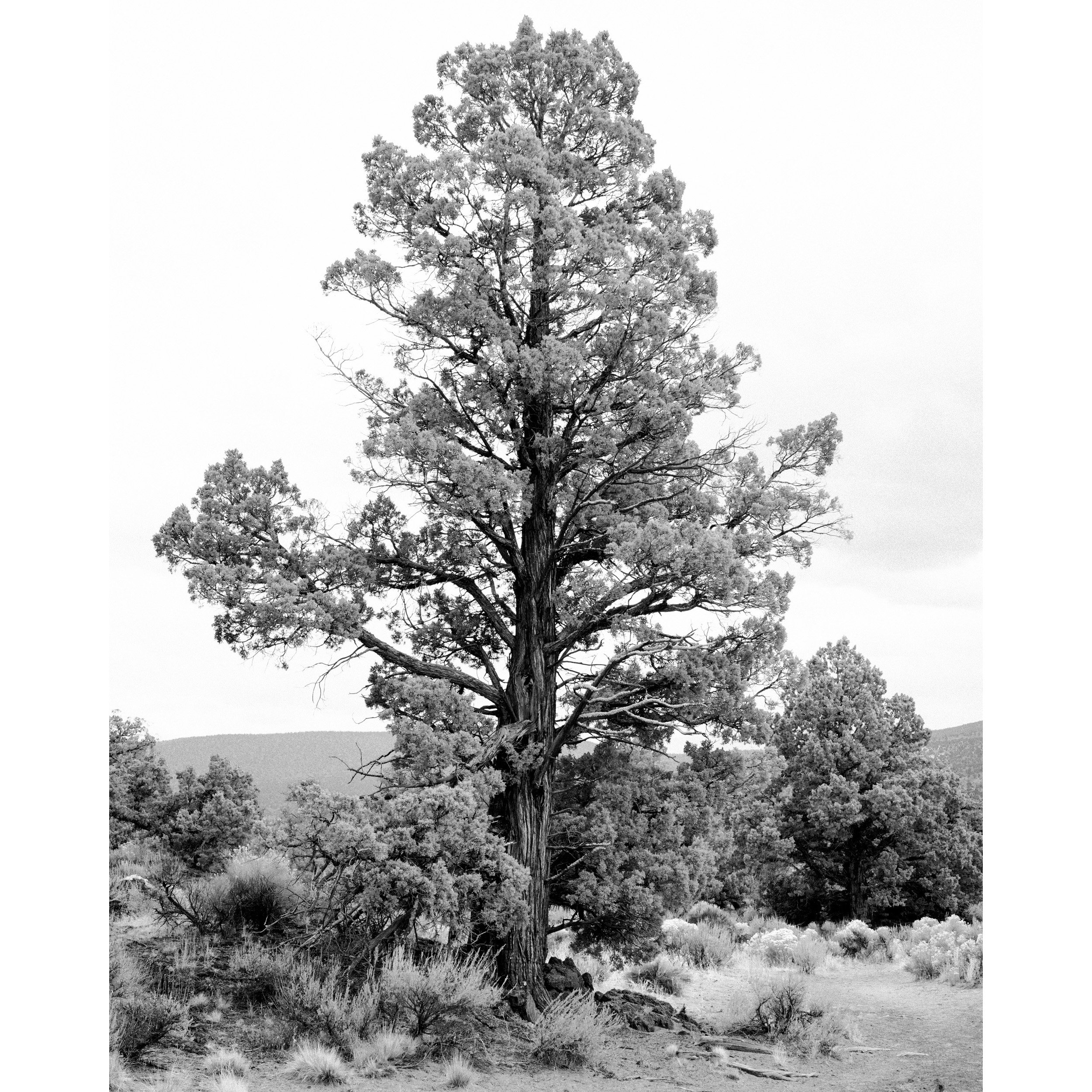
Western Junipers live in higher altitudes, typically higher than 2,600 feet and can grow up to 90 feet tall.
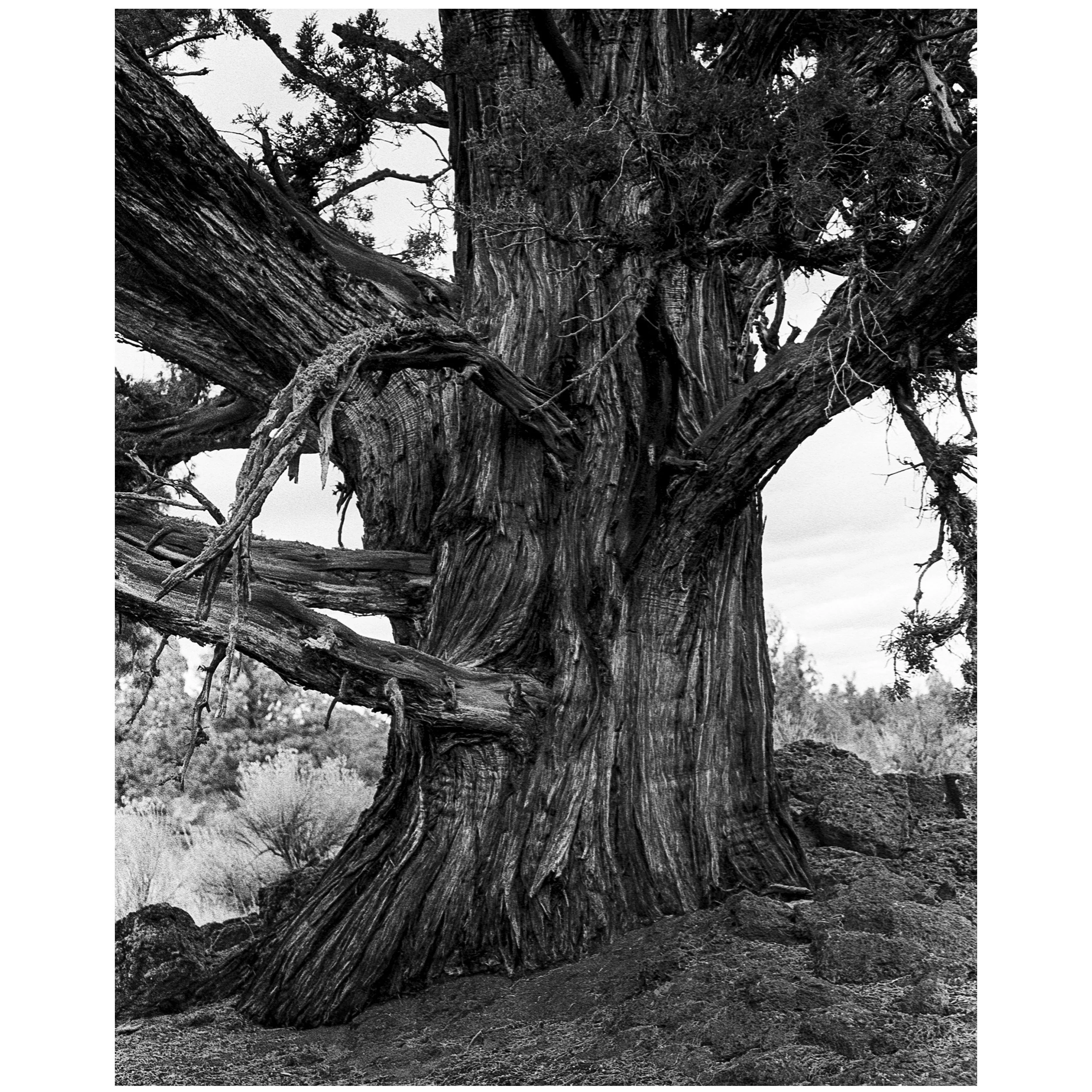
Perpendicular branches reflect natural growth and adaptation to wind, drought, and desert stress.
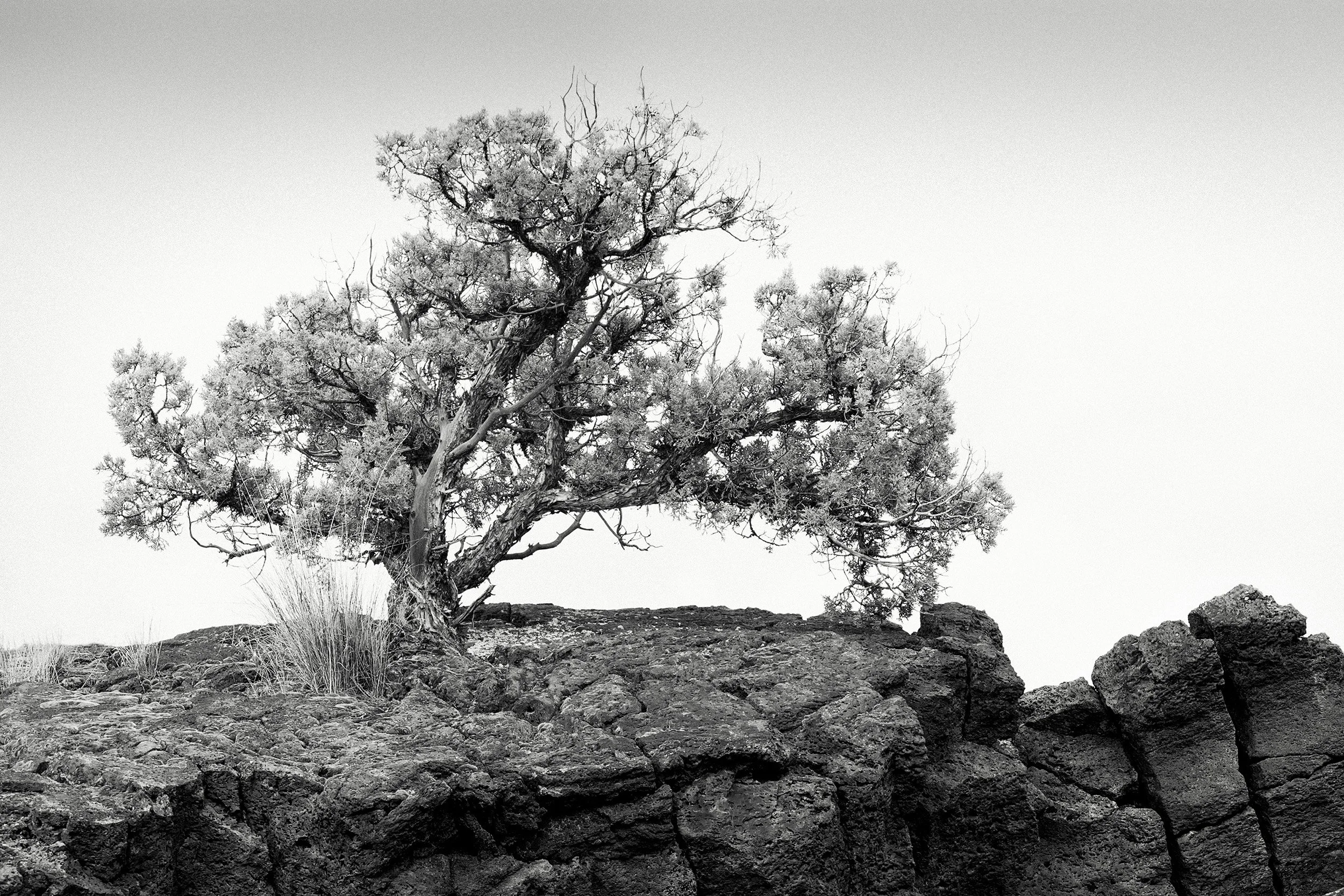
Junipers can take root within lava formations, occupying terrain few trees can.
Ultimately, the junipers persist, each branch and split trunk a testament to centuries of survival and adaptation.